Reliable, maintainable and easy to use. Your people work with your plant's data and your AI, all in one place.
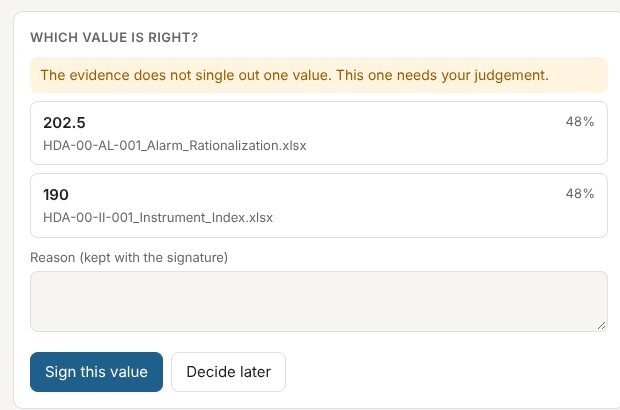
Reconcile reads your drawings and documents against each other and shows every place they disagree. Each decision is kept with its reason.
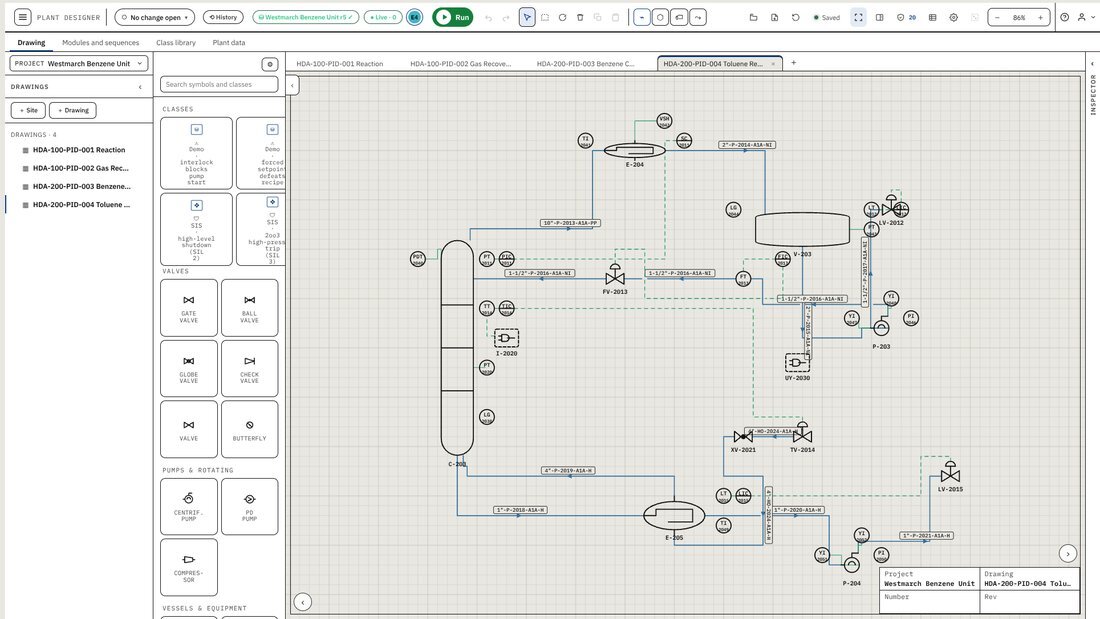
Design turns your P&IDs and documents into one model your team can query, walk and test, with the physical, process and procedural models in one view.
Historian captures every variable in your plant, from the plant itself or from the historian you already keep.
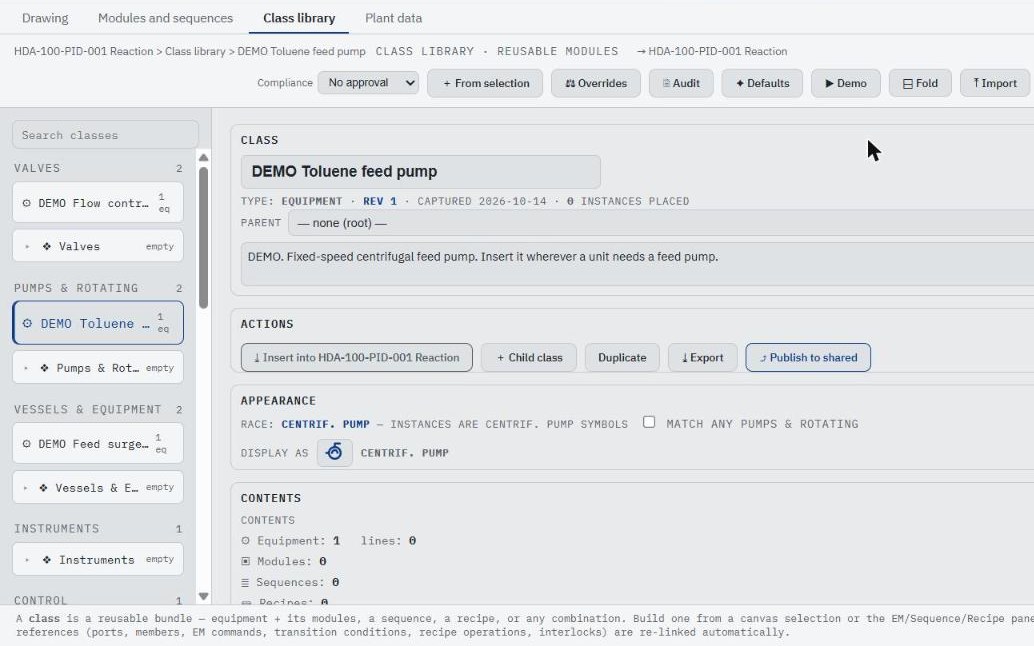
Libraries holds your phases and equipment modules, so units and sites reuse the same design.
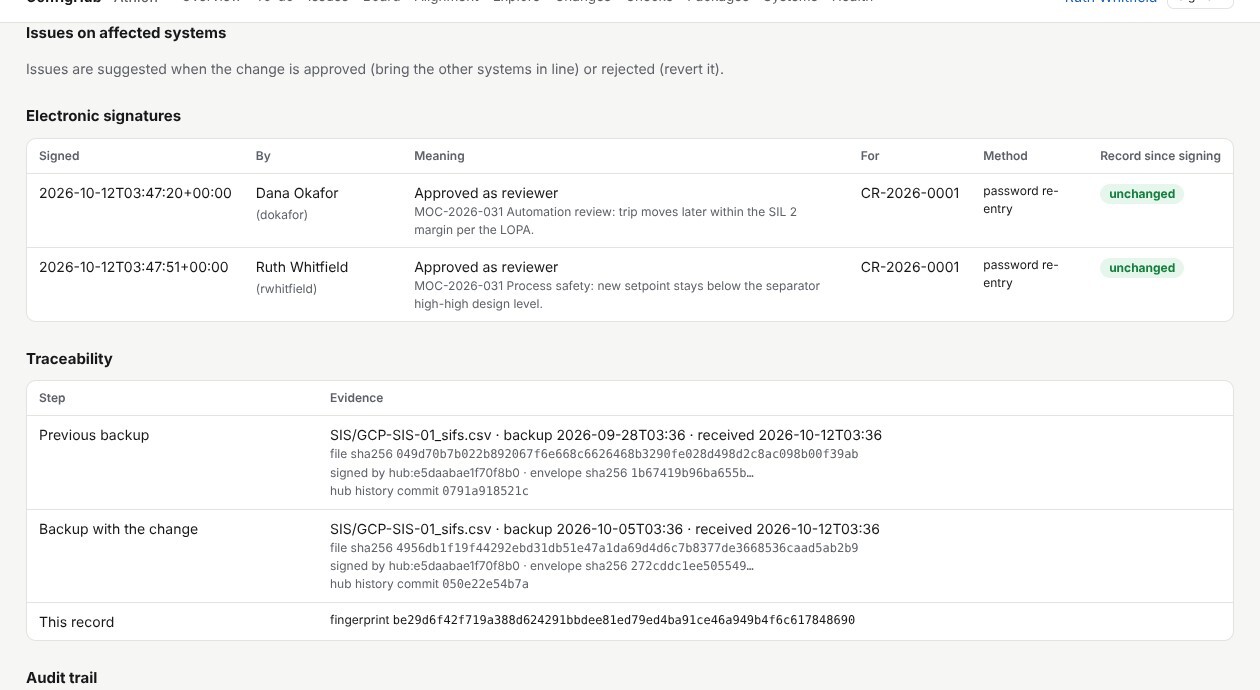
Workflows call your apps and carry the work from one activity to the next, so nothing is copied or re-keyed by hand.
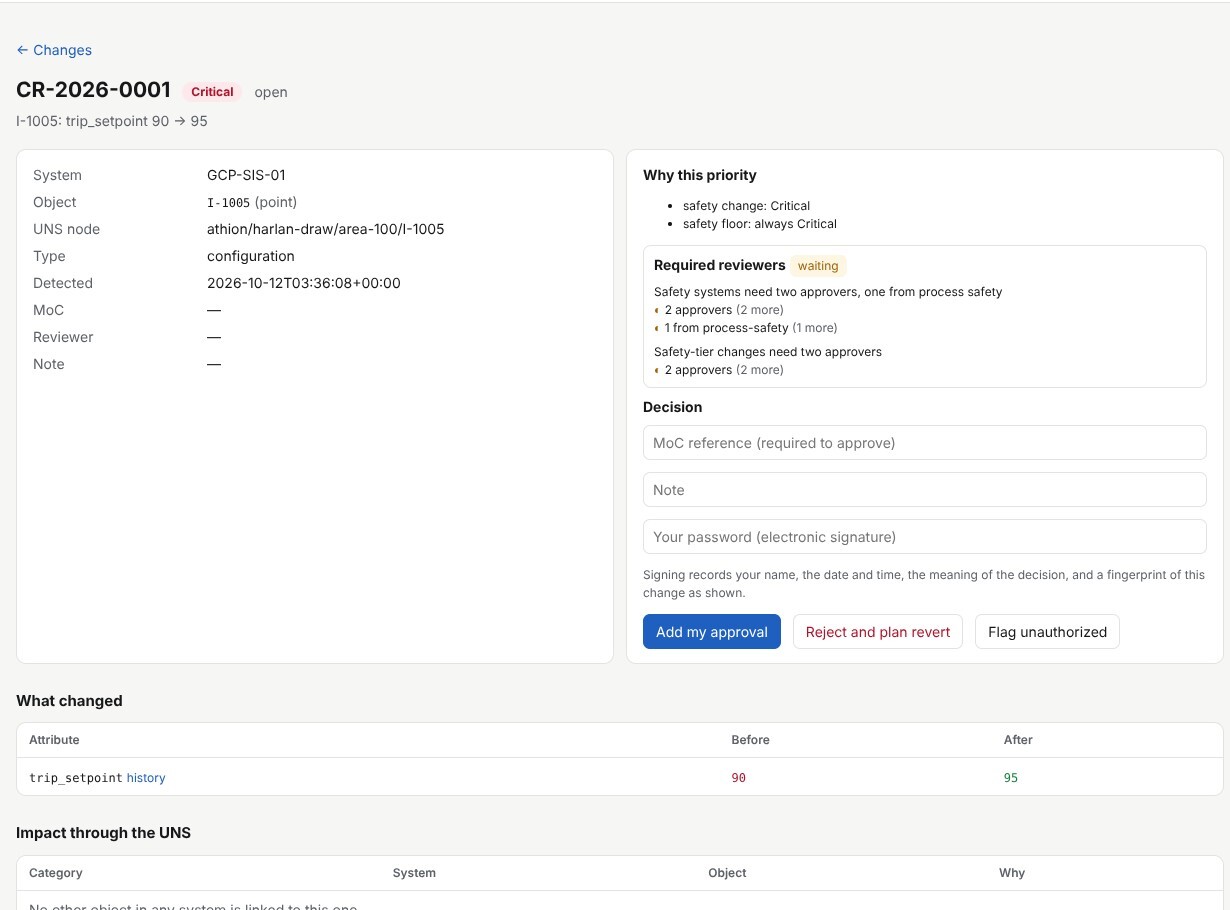
Sync reads your control system backups and shows what changed, and which drawings, documents and systems it touches.
Connect your favorite major model or use an open-source one. A full, sourced answer about your plant: the equipment, the documents and the operating data behind it.
 Reconcile
 reads your drawings and documents against each other and shows every place they disagree. Each decision is kept with its reason.
Where did this number come from?
Works with
 Design
 turns your P&IDs and documents into one model your team can query, walk and test, with the physical, process and procedural models in one view.
What does this design actually do when it runs?
From DXF and vector PDF to scanned PDF and images.
Physical, process and procedural models in ISA-88 and ISA-106.
Acceptance-test interlocks and sequences during design.
For the tools you already use.
The control narrative, sequence specification and interlock schedule, as Word documents.
Line, signal and I/O lists as spreadsheets, with your own columns and naming.
Generated from the flow and level model, with an editor and analyzer for custom exports.
Design is the Athion many of you already know, and it hasn't gone anywhere. It's now one app on the plant record, so the model you build here can be reconciled against your other documents and checked against the plant's history.
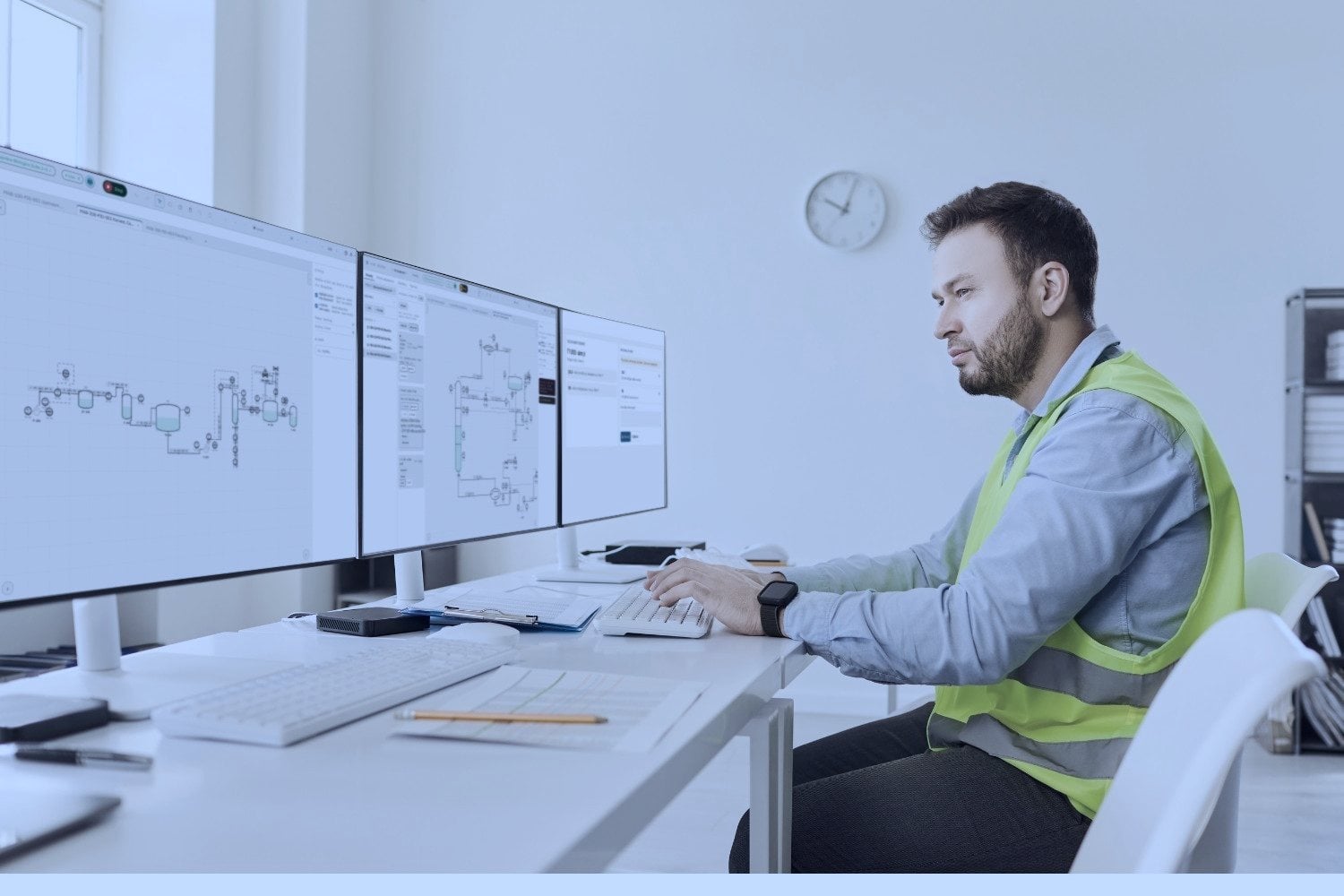 …the project that can't afford a surprise at FAT.
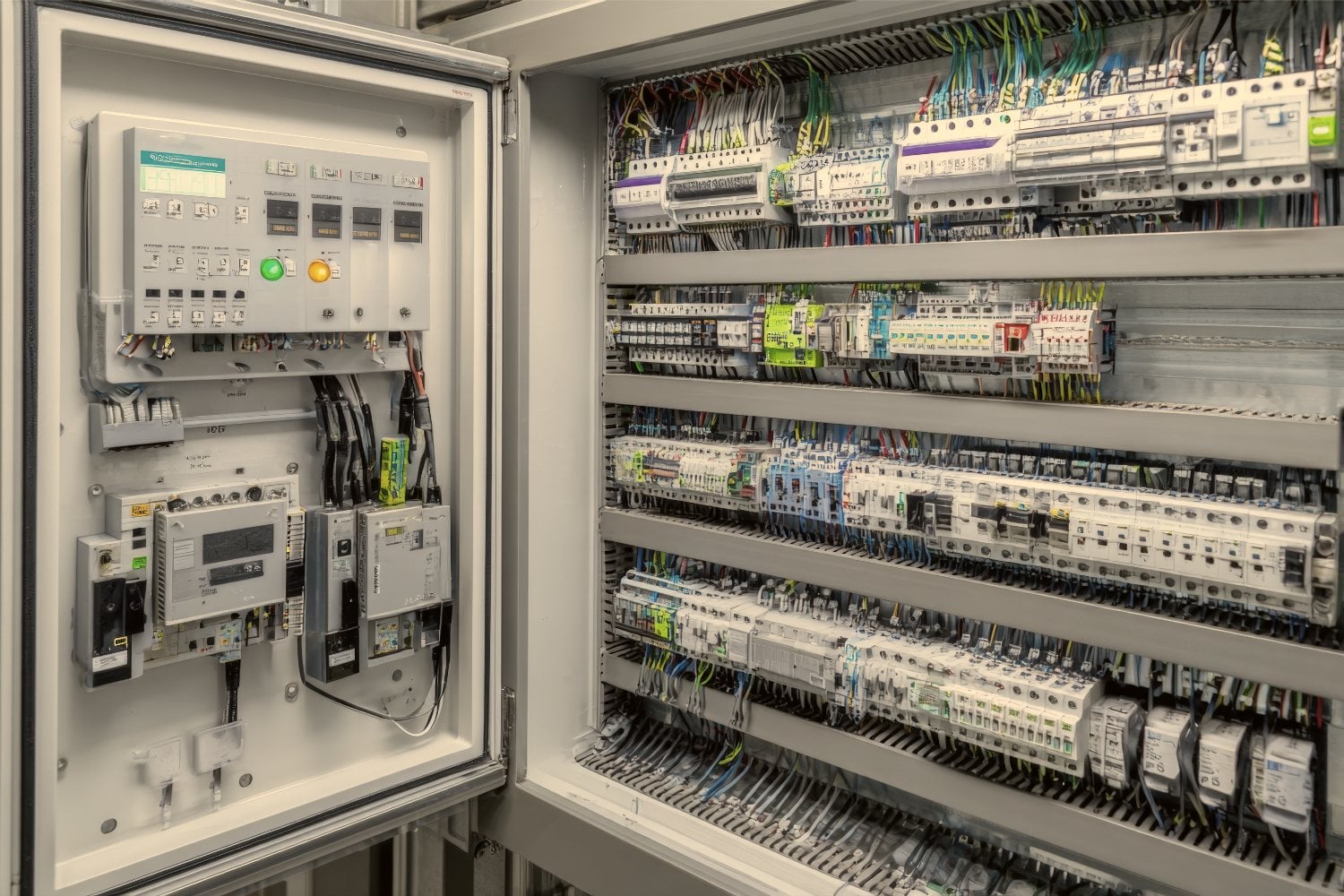 …the migration where the control system is the only spec.
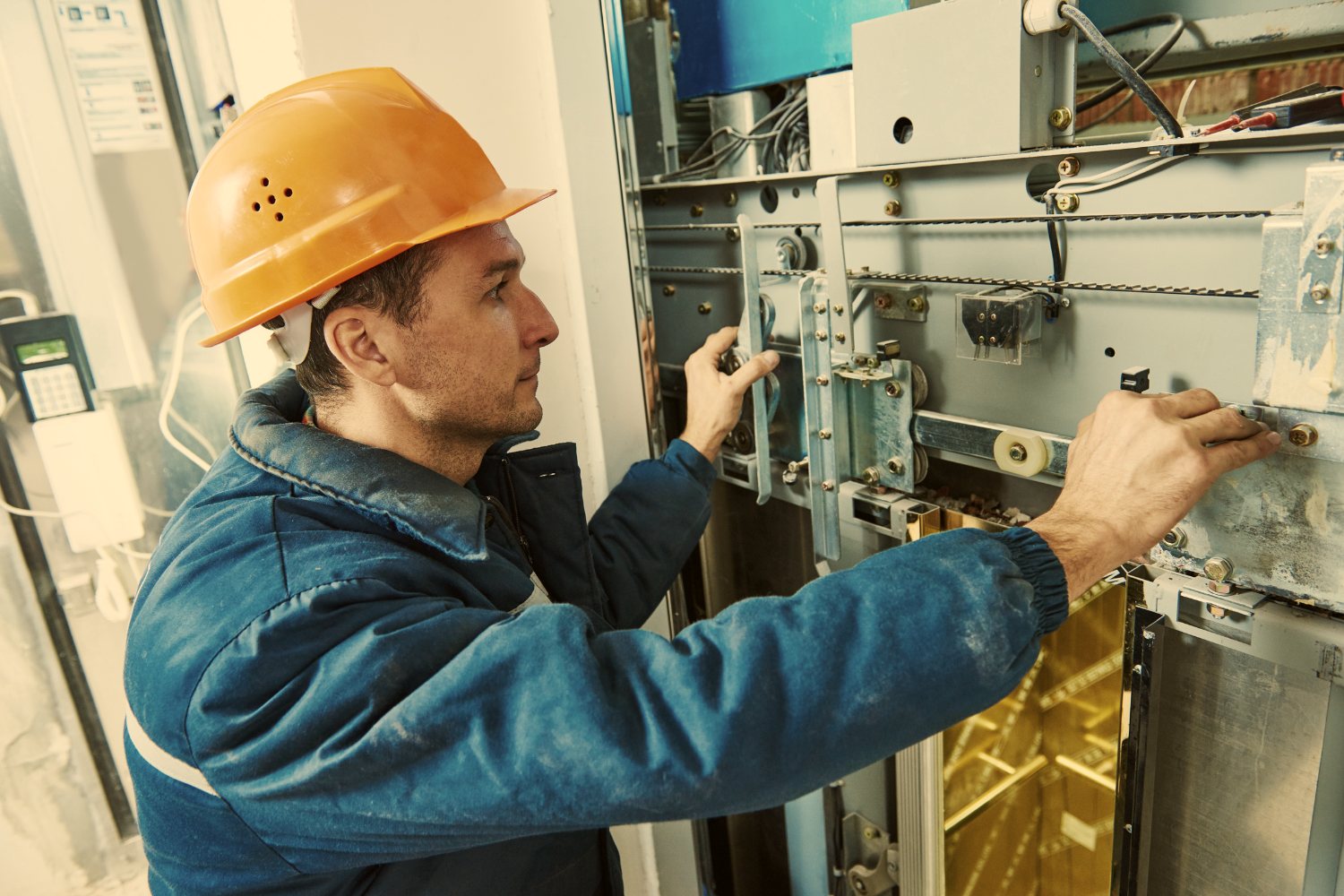 …the unit that runs in manual more than in auto.
Works with
 Historian
 captures every variable in your plant, from the plant itself or from the historian you already keep.
What was the plant doing when it happened?
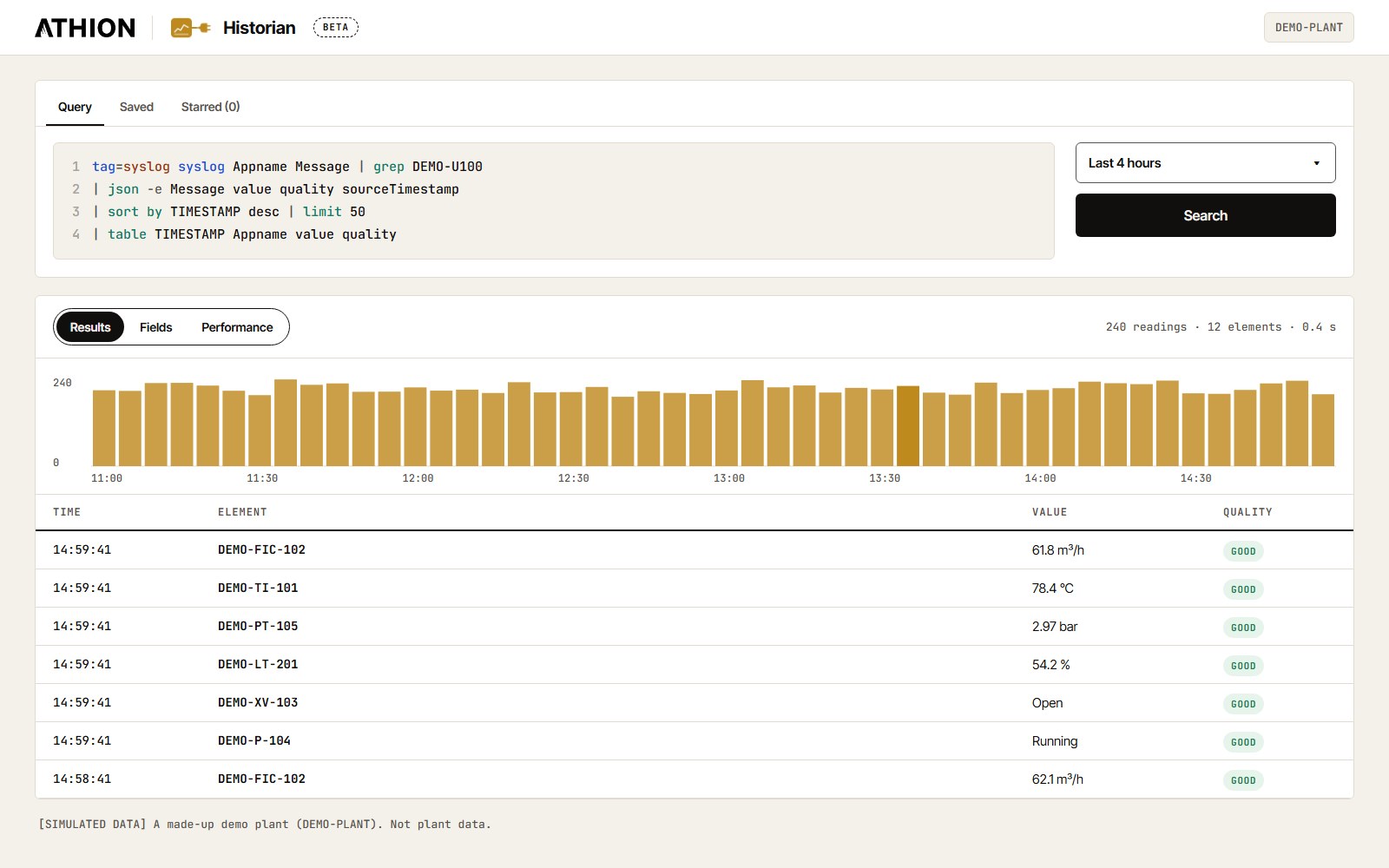
A typical historian keeps the key, critical values of your plant so you can see how it is running. Think of it as a blood draw: one small, simple network setup takes as much data out of the plant as possible, so you can see everything at once.
Capture every variable while the plant runs well, so you know what normal looks like.
When something unexpected happens, compare it with your baseline. Unexpectedly good is the hope. Unexpectedly bad will happen. Sometimes it is just weird.
Find the problem, or collect the information you need to solve it.
There are many excellent historians for keeping watch on a plant. Finding out why something happened is the problem Historian is built to solve.
Works with
 Libraries
 holds your phases and equipment modules, so units and sites reuse the same design.
Why does every site build the same phase differently?
Works with
 Workflows
 call your apps and carry the work from one activity to the next, so nothing is copied or re-keyed by hand.
Which request goes through the most inboxes before anything changes?
Works with
 Sync
Sync reads your DCS, PLC and SCADA backup files after every site backup, with no live connection to the plant. Each field change is caught, prioritized and routed to an owner, with safety systems always marked critical. You see which drawings, documents and systems the change touches. Ask us which systems are supported today.
What changed?
Works with
 Athion AI
A major model, one of your own, or a wholly private one, all working from the same plant record. We never train on your data.
Can I trust this answer?
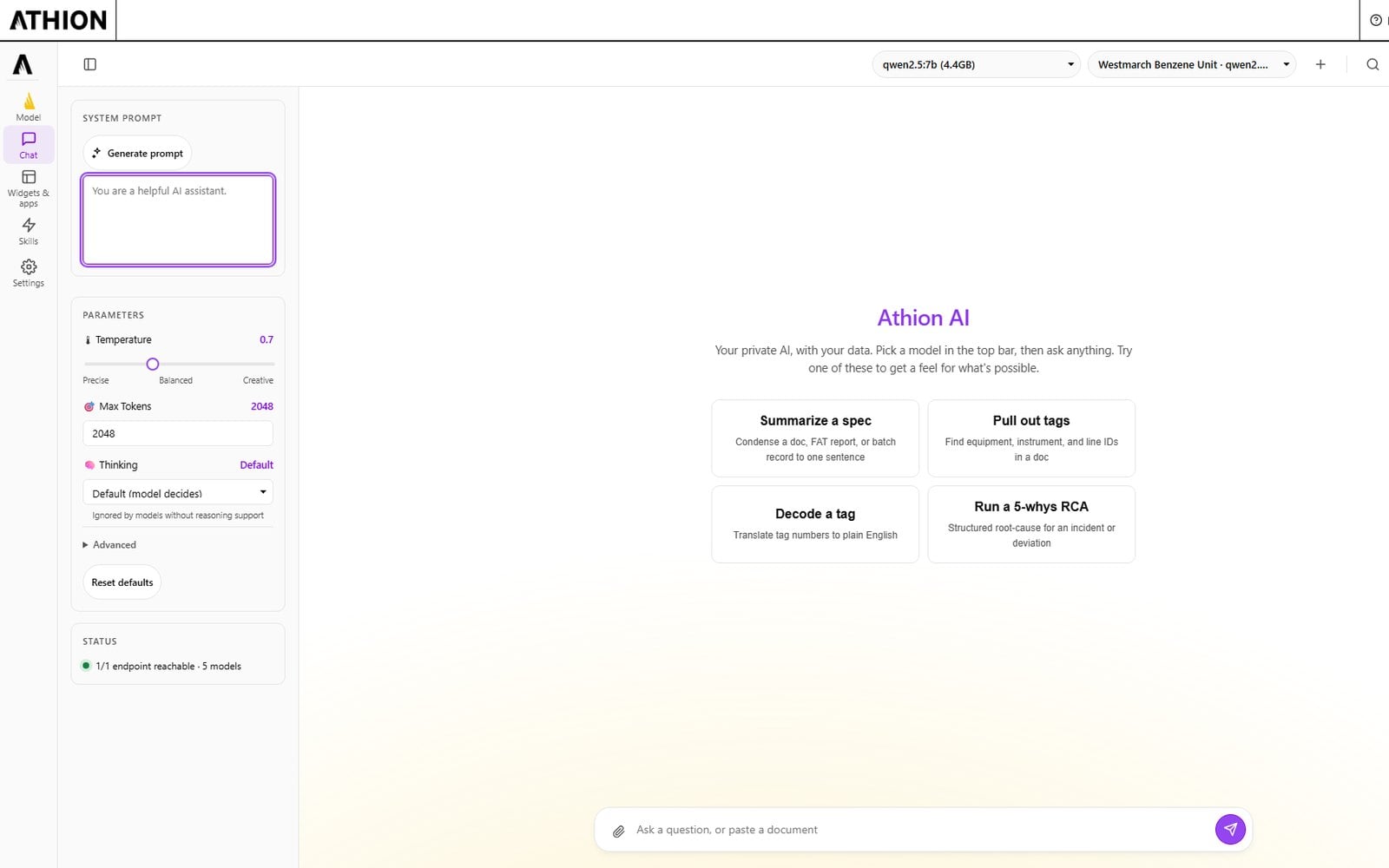
AI keeps evolving, models keep changing, and data privacy in this space is still being defined. Athion gives you the flexibility to change with it.
Use the major model your organization has adopted.
Add a model you develop yourself.
Use an open-source model that stays private, so your data doesn't have to go to a major model provider.
Change from one to another whenever you need to. There is no migration, because models plug into your plant's record. It is plug and play, and your work stays where it is.
Works with
Schedule a time, or start using Athion today.